A Collection of Mid Twentieth Century Argentine Art - A Personal View
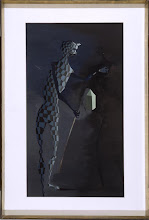
This is a selection from the painting collection my parents assembled between 1950 and the mid-1990’s.
My brothers and I photographed the collection to keep a record of it, and as a testament to what we thought was our mothers’ great eye and sensibility for art. It also celebrates her involvement in the Argentine art community, particularly at the MNBA (Museo Nacional de Bellas Artes) and at the Instituto Torcuato Di Tella.
The collection my parents assembled did not intend to be a comprehensive survey of Argentine art, but a highly personal selection of objects they enjoyed living with. Complimenting these were numerous objects: colonial silver, precolumbian ceramics, African art and unique pieces of furniture collected or commissioned over many years. All this, surrounded by a unique and historic house and garden. What sounds like paradise was in fact the only sensible way to survive a horrible political and social climate.
Argentine art has become over the years more limited in its international audience as Argentina became isolated and impoverished, result of its corrupt leaders. This decay has isolated Argentina, but also informed a creative impetus that created a unique voice. The development of the avant-garde in Europe at the beginning of the twentieth century and its passage to the Americas through certain key figures essential to understanding this collection. Pettoruti is one of these figures, with parallels in the literary world in Jorge Luis Borges, Guillermo de Torre, Oliverio Girondo, Macedonio Fernandez and Xul Solar. The impact of this avant-garde continues be felt and evolve, transforming the face of argentine art all the way until the 1970's.
Things take on a very character after that. Popular culture was crushed during the military regimes that came in that period, and the violence that crushed it took as victims the more rarified groups that had been at the center of cultural discourse.
Personally, I was lucky to leave Argentina in the mid-seventies. My physical well being was at stake. And with that, my memory and understanding of the processes at the center of cultural production cease. I have since become part of other groups, other concerns have taken over and with those I can see this art and that house in a new light. Like the garden of the Finzi-Contini, that garden held me prisoner, and freedom is better than beauty.
I have often compared my memories of Argentina to that of the Jews that survived the Holocaust. The Horror is very similar, even if the magnitude much smaller. I have since become more interested in identifying myself with this other, much older, tradition, because in it I see the meaning of struggle. And in the end it is this struggle that gave rise to the art that I am showing here. And so hte circle is closed.